Eye health in patients with high blood pressure is an often underestimated but extremely important medical issue. Chronically elevated blood pressure, also known as arterial hypertension, is a "silent killer" that can insidiously and painlessly damage not only the heart and kidneys, but also the delicate structures of your eyes. At our ophthalmology practice in Frankfurt Westend, Dr. Mareen Schmidt, an experienced retinal specialist, focuses on detecting these changes early, assessing their severity, and developing a strategy to protect your vision in close collaboration with your primary care physician or cardiologist.
The eyes in high blood pressure: A window to your entire vascular system
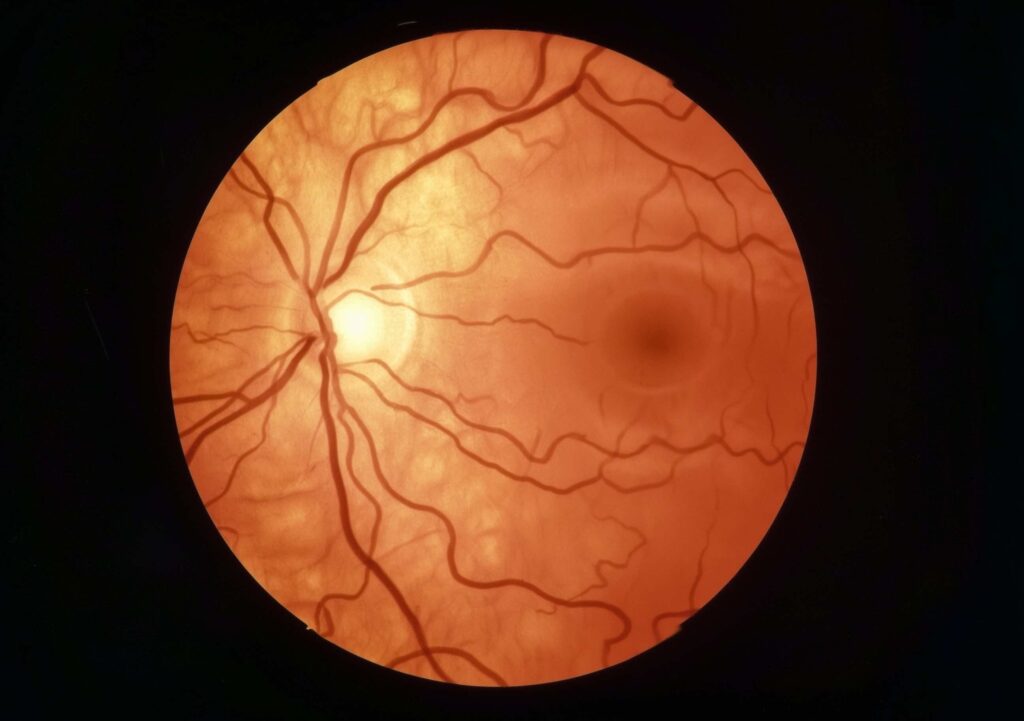
The investigation of Eyes in cases of high blood pressure This offers us ophthalmologists a unique opportunity: We can look directly through the pupil at the fine blood vessels of the retina and assess their condition. The retina is the only place on the human body where arteries and veins are visible non-invasively in their natural environment. The condition of these small vessels often reflects the condition of the vessels throughout the entire body – including the heart, brain, and kidneys. Changes in the Eyes in cases of high blood pressure Therefore, they are not just an eye problem, but an important warning signal for your overall cardiovascular health.
Hypertensive retinopathy: How high blood pressure damages the eyes
The medical term for damage to the retinal vessels caused by high blood pressure is hypertensive retinopathy. The constantly elevated pressure leads to progressive damage to the delicate vessel walls in several stages.
- Narrowing of the arteries: As a first reaction, the small arteries (arterioles) constrict to absorb the high pressure.
- Hardening of the vessel walls: If the pressure persists, the vessel walls thicken and harden (sclerosis). At the crossing points where arteries cross veins, the rigid arteries can compress the softer veins ("crossing sign").
- Damage to the blood-retinal barrier: The vessel walls become leaky. This can lead to small, flame-shaped or pinpoint hemorrhages in the retina.
- Fluid leakage: Fluid and fat leak from the damaged vessels, leading to deposits in the retina (hard exudates).
- Swelling of the optic nerve: In very severe, acute cases (hypertensive crisis), the optic nerve head can swell (papilledema), which constitutes an ophthalmological emergency.
Eye examination in cases of high blood pressure: Our procedure
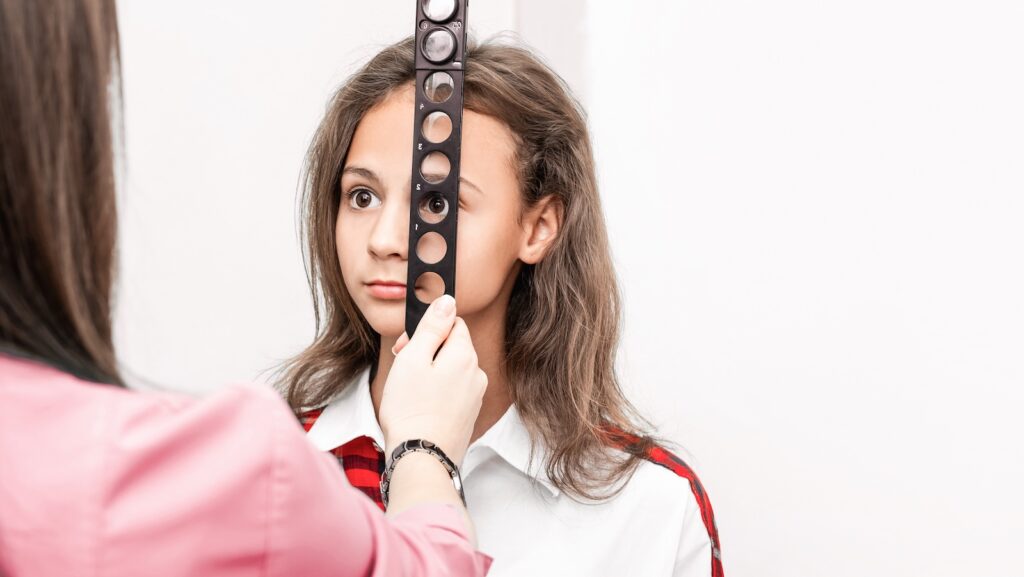
The Eye examination for high blood pressure In our Frankfurt practice, we offer a painless and careful process designed to accurately assess the condition of your retinal vessels.
- Medical history: We will ask about the duration and severity of your high blood pressure, as well as your current medication.
- Visual acuity test: We will determine your visual acuity in order to detect any existing impairments.
- Intraocular Pressure Measurement: Since high blood pressure can also be a risk factor for glaucoma, this measurement is an important component.
- Examination of the fundus: This is the crucial step. After dilating the pupil with medication (or using our modern wide-angle technology), Dr. Mareen Schmidt can assess the entire retina, blood vessels, optic nerve, and macula in detail and at high magnification.
An overview of the stages of hypertensive retinopathy
The changes to the Eyes in cases of high blood pressure They are classified into different levels of severity. The following table provides a simplified overview.
Stadium (after Keith Wagener-Barker) | Typical findings in the retina | Importance for your health |
Stage I | Mild to moderate narrowing of the arteries. | Early stage. A clear signal for consistent blood pressure control. |
Stage II | Increased narrowing, hardening of the vessel walls, "crossing sign". | The high blood pressure has been present for some time. The risk of vascular events is increased. |
Stage III | In addition to stage II: retinal hemorrhages, "cotton wool spots" (signs of oxygen deficiency), hard exudates (fat deposits). | Signs of already significant organ damage. The risk of stroke and heart attack is significantly increased. |
Stage IV | In addition to stage III: swelling of the optic nerve head (papilledema). | Signs of malignant, life-threatening hypertension. A medical emergency. |
Eyes in people with high blood pressure: Risks for other eye diseases
Chronic high blood pressure not only directly damages the retinal vessels, but also increases the risk of other serious eye diseases. Therefore, careful ophthalmological examinations also serve to detect these potential complications early.
- Retinal vascular occlusions: High blood pressure is the main risk factor for thrombosis in the eye, which is the blockage of a retinal artery or vein, and can lead to sudden, severe vision loss.
- Glaucoma (Green Star): High blood pressure can disrupt the sensitive blood flow to the optic nerve, thus increasing the risk of developing glaucoma damage.
- Macular degeneration (AMD): There is evidence that uncontrolled high blood pressure can negatively affect the course of age-related macular degeneration.
Frequently asked questions about eyes in people with high blood pressure
Here you will find answers to common questions that patients ask us about Eyes in cases of high blood pressure in our Frankfurt practice.
How often should I have my eyes checked if I have high blood pressure?
If you are newly diagnosed with high blood pressure, an initial eye examination is strongly recommended to document the baseline condition of your blood vessels. If your blood pressure is well-controlled and there are no changes in your eyes, checkups every one to two years are sufficient. However, if changes are already present (hypertensive retinopathy), more frequent, annual checkups are often necessary. Eyes in cases of high blood pressure necessary.
My vision is perfect. Is the examination still necessary?
Yes, absolutely. The changes in Eyes in cases of high blood pressure In its early stages, it causes no symptoms whatsoever. You won't notice the damage to your blood vessels. By the time visual disturbances occur, the disease is often already in an advanced stage (stage III or IV). Preventive examinations serve to detect damage before it becomes noticeable to you.
Is it possible to reverse the damage to the eyes caused by high blood pressure?
Changes in stages I and II, such as vasoconstriction, can partially or completely reverse themselves with consistent and successful blood pressure reduction. More severe damage, such as hemorrhages or hard exudates in stage III, often heals but can leave traces. However, damage to the optic nerve, once it has occurred, is irreversible. Timely examination of the Eyes in cases of high blood pressure is therefore crucial.
Does my pupil always need to be dilated for the examination?
For a complete and comprehensive assessment of the entire retina, pharmacological pupil dilation is the gold standard in the examination of the Eyes in cases of high blood pressure. In our practice, we also offer modern wide-angle photography, which in many cases allows for an excellent assessment without the need for wide-angle drops. Dr. Mareen Schmidt will determine individually whether this is sufficient in your case.
Will my health insurance cover the costs of the examination?
Yes, since high blood pressure is a systemic disease that has been proven to damage the eyes, regular eye examinations are important. Eyes in cases of high blood pressure This is a medically necessary service. Therefore, the costs for an examination of the fundus (back of the eye) are usually fully covered by private health insurance companies.
What is a "crossing sign"?
A crossing sign is a typical finding in long-standing hypertension. At the points where arteries and veins cross on the retina, the hardened artery compresses the softer vein. This is a clear sign of advanced vascular changes and an important criterion in the assessment of your Eyes in cases of high blood pressure.
My family doctor already checks my blood pressure. Why do I still need to go to the eye doctor?
Your family doctor or cardiologist is the expert for treating your blood pressure. The ophthalmologist is the only one who can assess the direct effects of blood pressure on the delicate blood vessels. The examination of your Eyes in cases of high blood pressure This is therefore an important addition and gives your family doctor valuable feedback on the success of the therapy and the extent of any organ damage that has already occurred.
I sometimes feel pressure in my eyes. Could that be from high blood pressure?
A feeling of pressure in the eyes is usually not directly related to high blood pressure. Blood pressure in the circulatory system and intraocular pressure are two separate systems. High blood pressure does not cause noticeable symptoms in the eyes. Nevertheless, any feeling of pressure should be checked by an ophthalmologist to determine the cause of the discomfort. Eyes, even in cases of high blood pressure, to find.
Is there anything I can do to protect my eyes?
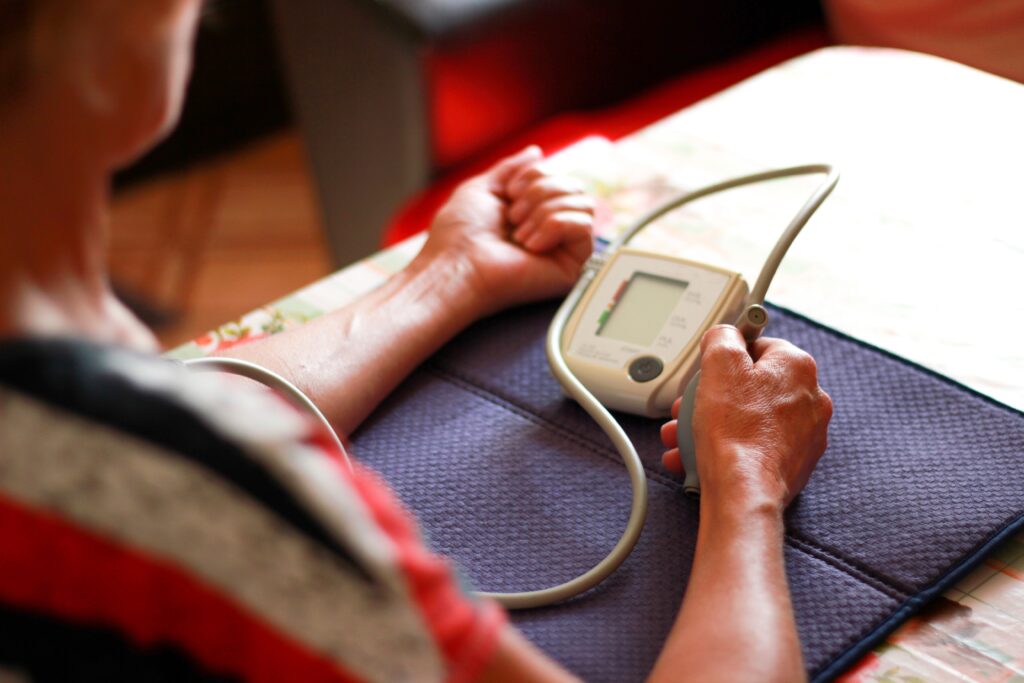
Yes, the most important contribution you can make is consistently adhering to your blood pressure therapy. Take your medication reliably and measure your blood pressure regularly yourself. A healthy lifestyle with a low-salt diet, regular exercise, and quitting smoking supports the treatment and not only protects your health. Eyes in cases of high blood pressure, but your overall health.
Why is a retinal specialist important for this examination?
As a retinal specialist, Dr. Mareen Schmidt has particular expertise in interpreting subtle changes in the retinal vessels. She can precisely classify the severity of hypertensive retinopathy and competently assess the risk of further complications such as vascular occlusions. This expertise is crucial for a high-quality evaluation of your Eyes in cases of high blood pressure.
Your eye health as a reflection of your overall health
The examination of your Eyes in cases of high blood pressure This is a simple, painless, yet extremely informative check-up. It not only protects your eyesight but also provides valuable information for managing your underlying condition and, consequently, your overall health. If you have a known high blood pressure, don't hesitate. Schedule an appointment for a comprehensive eye examination at our Frankfurt practice.