

The Dry eye treatment is a central focus in our Frankfurt practice in the Westend district, to which we devote ourselves with the utmost care and the most modern diagnostic methods. Millions of people suffer from the symptoms of dry eye, often referred to as Sicca syndrome or Office eye syndrome is the term used to describe them. Burning, itching, redness and a constant foreign body sensation can significantly impair the quality of life.
At the ophthalmology practice of Dr. Mareen Schmidt & Dr. Sebastian Schmidt, we take your complaints seriously and, after a thorough analysis, develop a treatment plan. Individual and sustainable strategy for your relief.
Dry eye, medically known as Sicca syndrome or Keratoconjunctivitis sicca is one of the most common diseases in ophthalmology. It is a multifactorial disease of the eye surface, which is characterized by a Loss of homeostasis of the tear film is characterized. This leads to typical symptoms such as burning, a sensation of sand grains, redness and visual disturbances.
The disease is complex and can be divided into two main forms, which are often mixed:
The tear film consists of three layers (lipid, water and mucin layer) and must be optimal in terms of quantity, composition and stability. A disruption in one of these areas leads to sicca syndrome.
In this form, the main lacrimal gland produces Not enough watery tears.
Causes:
Sjögren's syndrome (primary or secondary): An autoimmune disease that directly attacks and destroys the lacrimal and salivary glands.
Non-Sjögren's ADDE: More common and not caused by autoimmune diseases. Causes can be ageing (reduced gland function), lacrimal gland diseases or the intake of certain medications (e.g. beta blockers, antidepressants, antihistamines).
This is the most common form of the dry eye. Although the amount of tears is sufficient, the Lipid layer is defective, which causes the aqueous component to evaporate too quickly.
Causes:
Meibomian gland dysfunction (MDD): This is the main cause of EDE. The meibomian glands at the edge of the eyelid produce the lipids that prevent evaporation. In MDD, these glands are blocked or inflamed (meibomitis), which leads to poor lipid quality.
Inflammation of the eyelid margins (blepharitis): Often associated with MDD, it leads to chronic inflammation at the edge of the eyelid and disrupts lipid production.
External factors: Low humidity (air conditioning, heating), screen work (reduced blinking frequency), wearing contact lenses.
Regardless of the primary cause, dry eye often leads to a Vicious circle of inflammation. Damage to the surface of the eye releases inflammatory mediators that further damage the glands and exacerbate the problem.
Drug-induced: Many commonly used medications (see ADDE causes) reduce tear production. Preservatives in eye drops can also damage the surface of the eye.
Post-surgical: After refractive surgery (e.g. LASIK), dry eye can occur temporarily or permanently due to the severing of corneal nerves.
In rare cases, the patient's pain sensations are not directly proportional to the degree of objective dryness. This may be due to neuropathic component in which the pain fibers themselves are hypersensitive or the corneal nerves are damaged.
The symptoms are varied and can worsen during the course of the day, especially after intense exercise.
Burning, itching or scratching in the eye
A stubborn Foreign body sensation („Grain of sand in the eye“)
Reddened eyes and increased sensitivity to light
Blurred vision, which improves briefly by blinking
Tired, heavy eyelids
Paradoxical eye watering (Overproduction of watery tears as an emergency reaction to dryness).
The Office eye syndrome (also known as „digital eye strain“) is a specific form of dry eye that is triggered or exacerbated by the intensive use of digital devices (PC, smartphone, tablet).
During concentrated screen work, the frequency drops by up to 80%. The tear film is no longer distributed regularly and evaporates too quickly.
The constant, fixed gaze leads to overexertion of the ciliary muscle responsible for focusing.
Dry office or gaming room air and draughts from air conditioning systems also encourage evaporation.
A careful and precise diagnosis is the basis for every successful treatment in our Frankfurt practice. We analyze the exact condition of your tear film and eyelid margins.
Medical history: Detailed discussion about your symptoms, work and lifestyle habits and possible underlying illnesses.
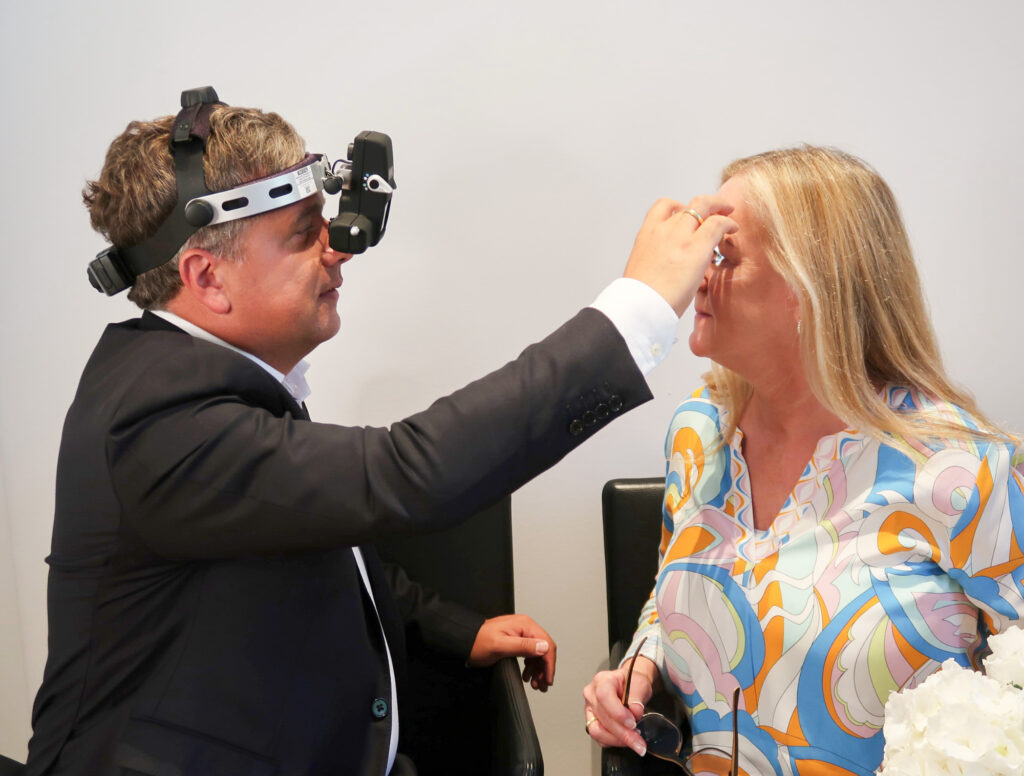
Slit lamp examination: Assessment of the ocular surface, eyelid margins and meibomian gland openings.
Tear film analysis:
Measurement of the Tear film break-up time (BUT) to assess the stability.
Staining of the eye surface: Visualization of tiny dry spots on the cornea and conjunctiva using a special dye.
The therapy is individually adapted to the cause and severity of your symptoms and follows a proven step-by-step plan:
| Measures | Focus | Application for |
| Tear substitutes | Moisten the surface of the eye with high-quality, unpreserved eye drops. | All forms, especially mild to moderate complaints. |
| Eyelid margin care | Daily warming (warm compresses) and gentle massage of the eyelid margins. | Evaporative form / meibomian gland dysfunction to improve the oil drainage. |
| Ergonomics | Application of the 20-20-20 rule, conscious blinking, optimization of the screen and room climate. | Office eye syndrome to reduce the load. |
Step-by-step plan for dry eye therapy
The therapy is individually adapted to the cause and severity of your symptoms and follows a proven step-by-step plan:
1. tear substitutes
Focus: Moisturizing the surface of the eye with high-quality, unpreserved eye drops.
Use for: All forms, especially mild to moderate complaints.
2. eyelid margin care
Focus: Daily warming (warm compresses) and gentle massage of the eyelid margins.
Application for: Evaporative form / meibomian gland dysfunction to improve oil drainage.
3. ergonomics
Focus: application of the 20-20-20 rule, conscious blinking, optimization of the screen and room climate.
Use for: Office eye syndrome to reduce strain.
Choosing the right product is crucial. We will advise you on whether you need aqueous or lipid-containing drops:
| Type of eye drops | Main active ingredient / property | Recommended for... |
| Aqueous humidifiers | E.g. hyaluronic acid in low concentration. | Mild discomfort, contact lens wearer. |
| Lipid-containing drops | Also contain an oil component. | The common evaporative form (MDD) to stabilize the lipid layer. |
| High viscosity gels | E.g. hyaluronic acid in high concentrations. | Severe complaints, for intensive use overnight. |
Types of eye drops and their application
Choosing the right product is crucial. We will advise you on whether you need aqueous or lipid-containing drops:
1. aqueous humidifiers
Main active ingredient / property: e.g. hyaluronic acid in low concentration.
Recommended for... Mild discomfort and contact lens wearers.
2. lipid-containing drops
Main active ingredient / property: Contains an additional oil component.
Recommended for... The common evaporative form (MDD) to stabilize the lipid layer.
3. high viscosity gels
Main active ingredient / property: e.g. hyaluronic acid in high concentration.
Recommended for... Severe complaints, for intensive use overnight.
This phenomenon is known as paradoxical tears and is one of the most common symptoms. When the surface of the eye is severely irritated due to dryness or an unstable tear film, it sends an acute distress signal. The eye reacts reflexively with a Overproduction of the aqueous tear component. However, as in many cases the Oily, stabilizing layer of the tear film (which is produced by the meibomian glands) is missing or disrupted, these "emergency tears" cannot adhere to the surface of the eye. Instead, they simply run off over the edge of the eyelid, which paradoxically leads to watery eyes. Targeted dry eye treatment stabilizes the tear film in its entirety and thus ends this cycle.
The Dry eye (Sicca syndrome) is the general medical term for the chronic undersupply of tear fluid to the surface of the eye, regardless of the cause (e.g. age, hormones, medication, environmental factors). The Office eye syndrome (also known as digital eye strain), on the other hand, is a specific form or a reinforcement Dry eye disease, which is directly triggered by the intensive and prolonged use of digital devices (PC, smartphone). The underlying mechanisms are often identical - namely a reduced blink frequency and the associated rapid evaporation of the tear film - which is why the therapeutic approaches often go hand in hand.
No, there are considerable qualitative and functional differences. Choosing the right eye drops is a crucial part successful treatment. First of all, it is important that the drops unpreserved as preservatives can additionally irritate the eye and damage the surface of the eye if used chronically. In addition, the active ingredient must match the cause of your dryness:
Aqueous drops (e.g. with pure hyaluronic acid) are particularly helpful in the case of a lack of the aqueous phase (hypovolemic form).
Lipid-containing drops also contain an oil component and are necessary for the much more common evaporative form (meibomian gland dysfunction) in order to stabilize the protective lipid layer and reduce evaporation. We will advise you individually as to which product is optimal.
In the vast majority of cases, chronic dry eye leads to does not lead to permanent blindness or irreversible loss of vision. However, the unstable and uneven tear film can lead to visual impairment. fluctuating, blurred and out of focus which severely impairs the quality of vision in everyday life. Only in very severe, chronic and, above all, untreated cases can constant dehydration lead to microscopic damage and inflammation on the corneal surface. Consistent and medically supervised treatment is therefore essential to ensure the long-term health and clarity of the cornea.
In many cases, dry eye is more of a Chronic predisposition or a consequence of the modern lifestyle (office eye syndrome), similar to dry skin. A "cure" in the sense of a one-off measure is therefore usually not possible. The treatment is usually a Continuous therapy, The aim is to bring the symptoms under control so well that you are largely symptom-free in everyday life. However, the need for regular moisturizing, eyelid care and compliance with rules of conduct usually remains long-term in order to prevent relapses and chronic irritation.
The relief of symptoms often begins with simple, immediately implementable ergonomic and behavioral measures:
The 20-20-20 rule: Look at an object 20 feet (about 6 meters) away for 20 seconds every 20 minutes to relax the ciliary muscle and reduce accommodation stress.
Deliberate blinking: Integrate small "blink breaks" into your working day or stick a reminder on your monitor, as the blink rate drops sharply when staring at the screen.
Indoor climate: Ensure sufficient humidity (ideally 40-60 %) and avoid direct draughts from air conditioning systems or fans, which greatly accelerate evaporation.
The most effective and important measure that you can take yourself at home is the Regular eyelid margin care with warmth and gentle massage. Special masks tailored to the eye area (e.g. with gel or grains) are much more suitable for this than a warm spoon. The use of home remedies such as We strongly advise against chamomile tea rinses, as camomile can often irritate the eye, dry it out or even trigger allergic reactions. Professional treatment is based on tested, sterile and safe methods.
Office eye syndrome describes complaints such as burning, dry or tired eyes caused by prolonged screen work. With a Eye check in Frankfurt we pay specific attention to the quality of the tear film and the condition of the eye surface. We then advise you on effective measures such as correct moisturization and ergonomic adjustments at the workplace.
Yes, nutrition can support the quality of the oily layer of the tear film. In particular, a sufficient supply of Omega-3 fatty acids is recommended in ophthalmology. These fatty acids, which can be found in fatty sea fish (salmon, mackerel), linseed, walnuts or as food supplements, can have an anti-inflammatory effect and positively influence the composition of the lipid (oil) produced by the Meibomian glands. In addition, sufficient Hydration (drink plenty of water) essential for the production of aqueous tears.
Yes, sticky eyelids in the morning are a classic and common sign of a Meibomian gland dysfunction (MDD), the most common cause of evaporative dry eye. During sleep, the eye produces fewer tears and the dysfunctional meibomian glands secrete a more viscous, low-quality oil secretion. This secretion remains on the eyelid margins and leads to stickiness in the morning. A consistent Eyelid margin care with daily warming and subsequent gentle massage is a central component of the therapy to liquefy the solidified secretions and improve drainage.
A blue light filter has no direct influence on the blink frequency or the evaporation of the tear film. It is therefore no substitute for moisturizing eye drops or compliance with ergonomic rules. However, a blue light filter can be useful for some patients, as it can reduce the subjective feeling of glare caused by bright screen light and, especially when working in the evening, can have a positive effect on the sleep-wake rhythm (by reducing blue light). As part of a comprehensive ergonomic strategy glasses can therefore be a useful addition for some patients.


Check-ups, laser medicine, interdisciplinary ophthalmology

Retina, macular therapy, laser medicine, prevention & more
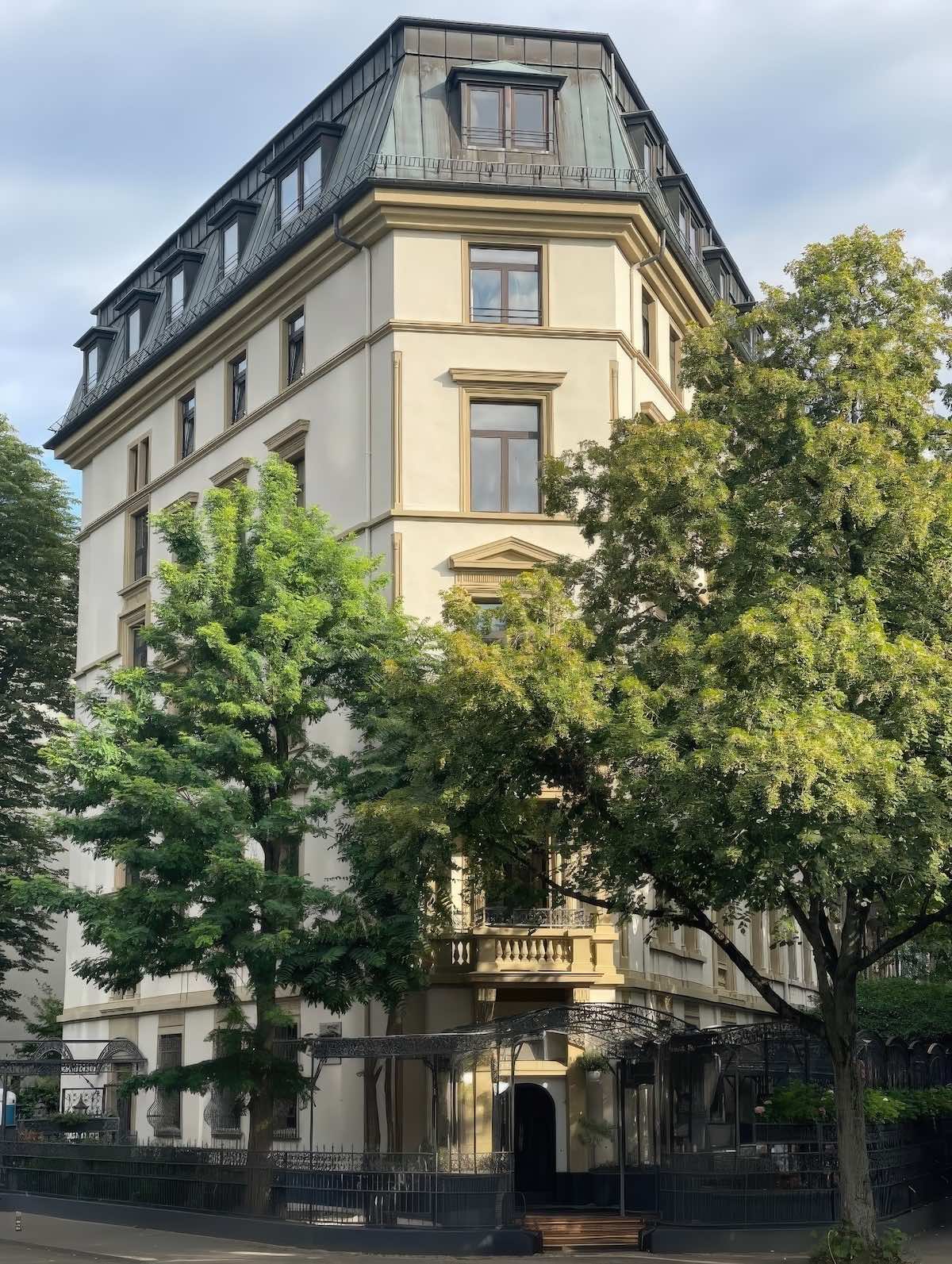
Address for the GPS:
Grüneburgweg 95 (corner of Liebigstraße), 60323 Frankfurt am Main.
Parking recommendations:
We recommend the following parking garages in the immediate vicinity:
Palmengarten parking garage: (Entrance via Siesmayerstraße). From there, it's about a 5-7 minute walk to the practice.
Campus Westend parking garage: (Entrance via Theodor-W.-Adorno-Anlage). Perfectly located for reaching the practice on foot in just a few minutes.
By bus (line 75):
Use the Bus route 75 and get off at the stop Eppsteiner Straße From there, it's only about a 2-3 minute walk (approx. 200 meters) along Grüneburgweg to the practice at the corner of Liebigstraße. Alternatively, you can use the bus stop. University Campus Westend to use.
By subway (U6 / U7):
Drive to the station Westend. Take the exit towards Feuerbachstraße/Liebigstraße. If you follow Liebigstraße straight ahead to the north, you will walk directly towards Villa Westend on Grüneburgweg (approx. 7-minute walk).
Alternative via the Palm Garden:
From the subway station Westend or the bus stop Palmengartenstrasse You can reach us after a short, pleasant walk past the Palm Garden.