Diabetic retinopathy is one of the most serious and common eye complications of diabetes mellitus. It develops gradually, painlessly, and often goes unnoticed by those affected for many years. At our ophthalmology practice in Frankfurt Westend, Dr. Mareen Schmidt, an experienced retinal specialist, focuses on treating this condition. diabetic retinopathy to detect early through careful and regular preventative care, to monitor their progression precisely, and to prevent impending vision loss through state-of-the-art therapies.
Diabetic retinopathy: Understanding the causes
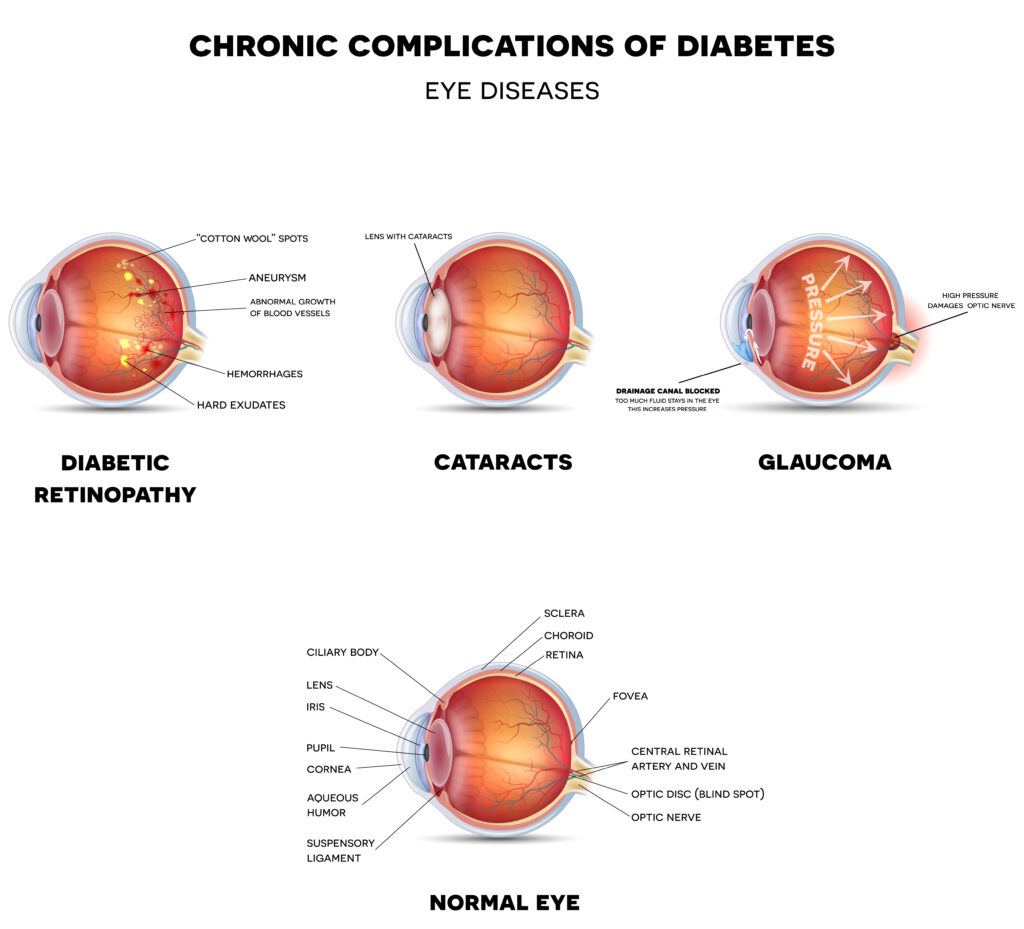
The diabetic retinopathy is a direct consequence of chronically elevated blood sugar levels.1 High blood sugar levels damage the fine and delicate blood vessels that supply the retina. This process, also known as microangiopathy, causes the vessel walls to become fragile and permeable.2 Blood and fluid can leak from these damaged vessels into the retina, leading to swelling and impaired photoreceptor function. A primary goal of ophthalmological care for diabetics is to detect and treat these changes as early as possible.
The stages of diabetic retinopathy: From the beginning to the advanced form
The diabetic retinopathy It develops in different stages, the precise classification of which is crucial for choosing the right therapy.3 A basic distinction is made between a non-proliferative and a proliferative form.4
- Non-proliferative diabetic retinopathy (NPDR): This is the early to moderate stage. The first visible changes to the retinal vessels occur, such as small bulges (microaneurysms), pinpoint hemorrhages, or fatty deposits (hard exudates).5 At this stage, most patients do not yet have any visual disturbances.6
- Proliferative diabetic retinopathy (PDR): This is the advanced and high-risk stage.7 In response to the increasing oxygen deficiency in the retina, the eye forms new, but abnormal and very unstable blood vessels. These can easily rupture and lead to severe bleeding into the vitreous humor, or shrink and scar, causing a retinal detachment.8
Another key problem that can occur at any stage is that diabetic macular edema (DME), a swelling of the central retina that directly threatens sharp vision.
Early detection of diabetic retinopathy: Why annual check-ups are essential
Since the diabetic retinopathy Since diabetes often causes no symptoms in its early stages, regular eye exams are the only way to detect the disease early. If you, as a patient, notice a decline in your vision, the disease is often already advanced and the chances of successful treatment are lower. Therefore, an annual eye exam is absolutely essential for every person with diabetes – type 1 and type 2 – to protect their eyesight in the long term.9 Only in this way can we determine the optimal time for any necessary treatment.
The examination for diabetic retinopathy in our practice
A comprehensive examination in our Frankfurt practice is a structured, painless process designed to provide a complete picture of the condition of your retina.
- Medical history: We begin with a detailed discussion about the duration and type of your diabetes, your current blood sugar levels (especially HbA1c) and your blood pressure control.
- Examination of the fundus: This is the crucial part. After dilating the pupil with medication (or using our modern wide-angle technology), Dr. Mareen Schmidt can assess the entire retina, blood vessels, optic nerve, and macula in detail and look for typical signs of [a condition/disease]. diabetic retinopathy investigate.
- Optical coherence tomography (OCT): If swelling of the macula (diabetic macular edema) is suspected, we use this high-resolution scanning procedure to create a micrometer-precise layer image in order to visualize any fluid accumulation.
- Depending on the need, further examinations can be carried out in the practice using OCT angiography, wide-angle photography, fluorescence angiography, ICG angiography and fundus autofluorescence.
Comparison of the stages of diabetic retinopathy
stage | Main feature of the retina | Typical effect on vision | Main risk |
Non-proliferative retinopathy | Minor bleeding, fatty deposits, leaky vessels. | Usually no symptoms or only mild ones. | Progression to the proliferative form, development of macular edema. |
Proliferative Retinopathy | Growth of new, abnormal blood vessels. | Can lead to sudden, massive vision loss due to bleeding. | Vitreous hemorrhage, retinal detachment, blindness. |
Modern treatments for diabetic retinopathy
Should we detect any changes requiring treatment during your examination, this is no cause for panic, but rather an opportunity to prevent serious visual impairment. Modern ophthalmology offers excellent treatment options:
- Laser therapy (photocoagulation): In a proliferative diabetic retinopathy Oxygen-deprived areas in the outer retina are selectively destroyed using a laser.10 This stops the growth of dangerous new blood vessels and prevents severe bleeding.
- IVOM therapy (eye injection): For diabetic macular edema, the gold standard is the injection of medication (VEGF inhibitors) into the eye. These seal the blood vessels and reduce the swelling, often significantly improving vision.
Frequently Asked Questions about Diabetic Retinopathy
Here you will find answers to frequently asked questions that we patients receive during an examination. diabetic retinopathy in our Frankfurt practice.
How often do I need to have my eyes checked if I have diabetes?
For every diabetic – type 1 and type 2 – an annual examination for early detection of diabetes is recommended. diabetic retinopathy the absolute minimum, even if you have no vision problems whatsoever.11 As soon as initial changes to the retina are detected, shorter check-up intervals are often necessary, for example every three to six months. It is essential that you keep these appointments.
My vision is perfect. Is the examination still necessary?
Yes, absolutely. diabetic retinopathy It causes no symptoms in its early stages. By the time you notice a decline in vision, the disease is often already quite advanced. An annual eye exam is the only way to detect damage before it becomes noticeable and potentially irreversible.
Will my health insurance cover the costs of the examination?
Yes, since diabetes is a systemic disease that has been proven to damage the eyes, regular examinations are essential for early detection. diabetic retinopathy a medically necessary service.12 The costs for an examination of the fundus (back of the eye) are usually covered by private health insurance. So you can concentrate fully on your eye health.
Does my pupil always need to be dilated for the examination?
For a complete and comprehensive assessment of the entire retina, pharmacological pupil dilation is often the gold standard when examining for diabetic retinopathy. In our practice, we also offer modern wide-angle photography, which in many cases allows for an excellent assessment without the need for wide-angle drops. Dr. Mareen Schmidt will determine individually whether this is sufficient in your case.
What can I do myself to protect my eyes?
The most important contribution you can make is to optimally manage your underlying condition. Stable and well-controlled blood sugar and blood pressure levels are the best insurance against the progression of the disease. diabetic retinopathy. Regular eye examinations are then the second, equally important component of your personal preventative strategy for maintaining your eyesight.
Is an eye exam painful for people with diabetes?
No, the entire process of investigating diabetic retinopathy The procedure is painless. The microscopic examination, pressure measurement, and OCT scan are all non-contact. Only the eye drops for pupil dilation may cause a slight burning sensation and temporary sensitivity to light for a short time, which is normal.
What is the difference in the eyes between type 1 and type 2 diabetes?
Both types of diabetes can lead to the same damage to the eye and a diabetic retinopathy This leads to complications. In the case of type 1 and type 2 diabetes, the first examination should take place immediately after diagnosis, as the diabetes has often been undetected for some time and changes in the eye may already be present.
Can diabetic retinopathy reverse itself?
Early stages of non-proliferative diabetic retinopathy With excellent and stable blood sugar control, these changes can indeed regress. However, advanced damage or scarring is usually irreversible. The goal of any examination and subsequent therapy is to prevent progression and stabilize vision.
Do I need to see a diabetologist or an ophthalmologist for the examination?
For the examination for diabetic retinopathy Your ophthalmologist is solely responsible for your eye health. The treatment of your diabetes itself is handled by your general practitioner or diabetologist. Good cooperation and regular exchange of information between these two specialists are crucial for your health, which is why we always send your treating physician a detailed report.
Why is a retinal specialist important for the examination?
As a long-time senior physician at the Clinic for Retinal Diseases in Frankfurt and a retinal specialist, Dr. Mareen Schmidt has particular expertise in interpreting subtle changes in the... diabetic retinopathy and in the performance of modern therapies such as laser and IVOM. This expertise is crucial for determining the right time for any necessary treatment and for carrying it out at the highest level to best protect your eyesight.
Your eyesight in diabetes: Take preventative care seriously
The diabetic retinopathy It is a serious disease, but it is manageable with timely detection and consistent treatment.14 Don't wait for symptoms, which often come too late. Keep your annual check-up appointments. If you are diabetic, please feel free to schedule an appointment for a comprehensive eye examination at our Frankfurt practice.