A cataract examination at our Frankfurt practice is the first and most important step in addressing one of the most common causes of age-related vision loss. Cataracts, medically known as cataracts, develop gradually, leading to a progressive clouding of vision, as if looking through a fog. At Dr. Mareen Schmidt's ophthalmology practice in Frankfurt's Westend district, we combine years of experience with state-of-the-art diagnostic technology to provide you with a precise examination. Cataract examination To provide clarity about the condition of your eye lens and to plan the optimal time for treatment together with you.
What exactly is a cataract?
Cataracts are a natural age-related change in the eye's lens. The originally clear and flexible lens, responsible for focusing at different distances, loses elasticity over time, and its protein structures clump together. This leads to increasing cloudiness, which scatters and blocks incoming light. Vision becomes blurred, colors fade, and sensitivity to glare increases. Cataract examination It serves to objectively assess the extent of this clouding and to differentiate it from other eye diseases.
Cataract examination: Typical symptoms that require further investigation
Because cataracts develop gradually, the first symptoms are often misinterpreted as a normal sign of aging rather than an illness. If you notice one or more of the following signs, you should consider cataracts. Cataract examination advisable in our practice in Frankfurt.
- Slow vision loss: You notice that your eyeglass prescription changes more frequently and that your vision is no longer optimal despite getting new glasses.
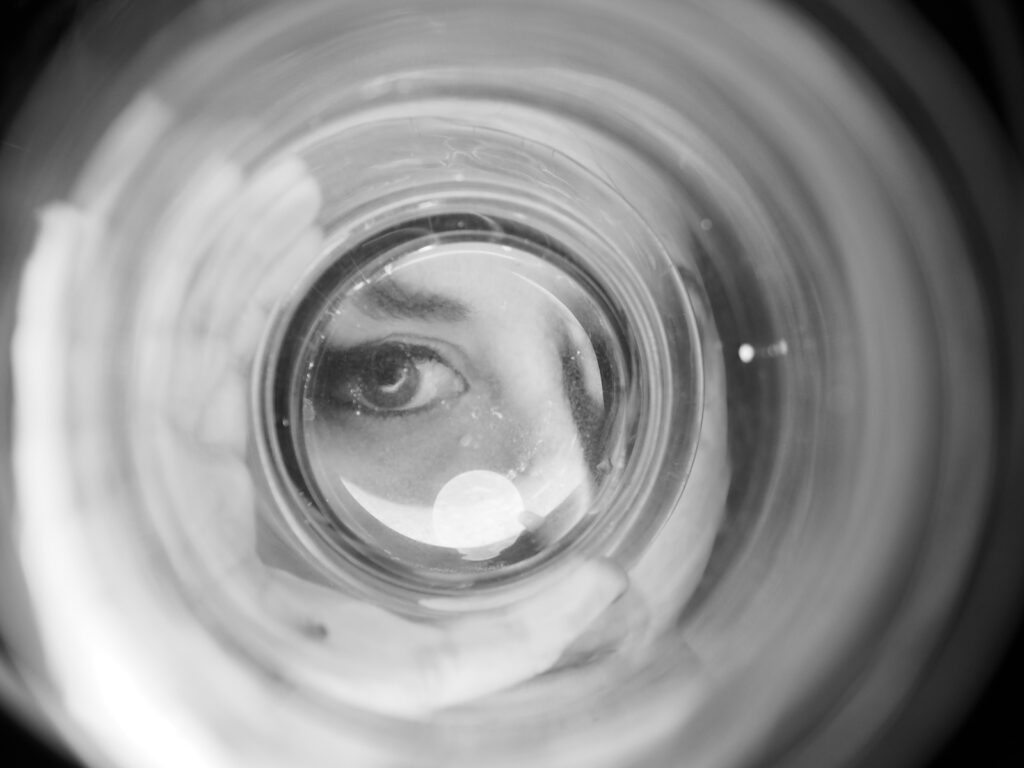
- Blurred or foggy vision: The world appears as if viewed through a veil or a dirty windowpane.
- Increased glare sensitivity: Headlights from oncoming cars or bright sunlight are significantly more dazzling than before.
- Fading colors: Color perception loses intensity and contrast.
- Double vision in one eye: Perception of disturbing double contours that persist even when the other eye is closed.
- Changes in myopia: Sometimes patients temporarily notice an improvement in near vision („a second spring of sight“), which, however, is a sign of progressive lens opacity.
The procedure for your cataract examination in our practice
One Cataract examination It is a painless and straightforward process. In our practice, we take the time to carry out each step carefully and without rushing in order to make an accurate diagnosis.
- Medical history and visual acuity test: First, we will discuss your symptoms and precisely measure your current visual acuity with and without correction.
- Slit lamp examination: This is the most important examination for assessing cataracts. Using a special microscope (a slit lamp), Dr. Mareen Schmidt can examine the lens of the eye at high magnification and accurately assess the type and extent of the clouding. For optimal evaluation, it may be necessary to dilate the pupil with medication.
- Intraocular Pressure Measurement: We measure the intraocular pressure to simultaneously rule out glaucoma.
- Examination of the retina: A thorough Cataract examination This always includes a look at the retina to ensure that no other diseases (such as macular degeneration) are contributing to the deterioration of vision.
Vision with and without cataracts: A comparison
The following table illustrates how visual perception changes with the development of a cataract. Cataract examination makes these changes objectively measurable.
Feature | Seeing with a clear lens | Vision with cataracts |
Contrasts | Clearly and sharply defined. | Blurry, as if washed out. |
Colors | Powerful and brilliant. | Faded, often with a yellow or brownish tint. |
Night vision | Clear view, minimal glare. | Severe glare from headlights, perception of halos. |
Visual Acuity | Sharp, effortless recognition of details. | Blurry, foggy, needs more light to read. |
The 5-S Method: Our Quality Standard for Your Cataract Examination
Even during a routine examination such as the Cataract examination We apply the principles of our 5-S method developed by Dr. med. Mareen Schmidt.
- Safe: We make an accurate diagnosis and reliably differentiate cataracts from other eye diseases.
- Gentle: All measurements and examinations are carried out with the utmost care.
- Low pain: The entire examination is completely painless.
- Sterile: The highest hygiene standards are a matter of course for us.
- Carefully: We take the time for a thorough examination and comprehensive, understandable advice about the results.
The result of the cataract examination: When is surgery advisable?
A diagnosis of cataracts does not automatically mean that surgery is necessary immediately. The outcome of the Cataract examination This forms the basis for a joint decision. The right time for surgery has come when your deteriorating vision restricts you in your daily life. Do you feel unsafe while driving, especially at night? Do you have difficulty reading or recognizing faces? Are you bothered by glare? If you answer "yes" to these questions, surgery is generally advisable. Dr. Mareen Schmidt will advise you thoroughly and without pressure.
After the examination: The path to clear vision
Should we after the Cataract examination If you and your doctor jointly decide that surgery is the best option for you, you are in the best hands with us. Dr. Mareen Schmidt is an experienced surgeon who will provide you with comprehensive advice. The surgery is one of the safest and most successful procedures in all of medicine. During the procedure, the clouded lens is removed and replaced with a modern, clear artificial lens. Postoperative care takes place in the comfortable and familiar atmosphere of our Frankfurt practice.
Frequently asked questions about cataract examination
Here you will find answers to frequently asked questions about the examination and diagnosis of cataracts.
At what age should I consider having a cataract examination?
Cataracts are a typical age-related disease that usually begins around age 60. We therefore recommend paying close attention to signs as part of your regular check-ups from this age onwards. Cataract examination However, it is advisable at any age if you notice typical symptoms such as a gradual deterioration of your vision.
Is cataract examination painful?
No, the Cataract examination The procedure itself is completely painless. All measurements and inspection under the microscope (slit lamp) are performed without contact or, if pupil dilation is necessary, after administering eye drops. Our gentle approach ensures that your Cataract examination as pleasant as possible.
Will my health insurance cover the costs of the examination?
Yes, the costs are usually covered by private health insurance.
How long does a cataract examination take?
For a thorough Cataract examination Including the necessary measurements and the subsequent consultation, you should allow approximately 30 to 45 minutes. If pupil dilation is required, you will need to allow a little more time due to the time it takes for the drops to take effect and the subsequent sensitivity to glare, and you must not drive yourself.
Can cataracts be treated with medication or glasses?
No, unfortunately not. Currently, there are no medications or eye drops that can stop or reverse existing lens clouding. New glasses can initially help improve vision, but as the clouding progresses, surgery is the only effective treatment. Cataract examination It serves to determine this point.
What is the difference between glaucoma and cataracts?
These two conditions are often confused, but they are fundamentally different. Cataracts are a clouding of the eye's lens that can be treated surgically. Glaucoma is a disease of the optic nerve, the damage to which is irreversible. A comprehensive Cataract examination This always includes an examination of the optic nerve.
What happens if I decide against surgery?
Cataracts are not an emergency condition. If you are looking for a doctor to treat them... Cataract examination If you decide against surgery, your eyesight will slowly deteriorate over months and years. You are not taking an acute medical risk, but you are accepting a progressive reduction in your quality of life.
Can cataracts recur after surgery?
No, the actual cataract cannot recur after surgery, as the natural lens has been removed. However, a thin membrane behind the new artificial lens can become cloudy after months or years; this is called a secondary cataract. This is not a complication, but a normal reaction of the eye and can be quickly and painlessly corrected in our practice with a laser treatment.
Is a cataract examination still worthwhile if I have already had surgery?
Yes, regular eye exams are important even after successful cataract surgery. As part of such a program... Cataract examination We check the position of the artificial lens, the eye pressure and, above all, the health of your retina, as other age-related diseases such as macular degeneration can occur independently.
Why should I have my examination performed by Dr. Mareen Schmidt in Frankfurt?
At Dr. Mareen Schmidt's practice, you benefit from a Cataract examination, The procedure is performed by an experienced surgeon. She can not only make the diagnosis but also provide you with expert, first-hand advice on all aspects of the operation. This comprehensive care, from diagnosis to aftercare, builds trust and ensures the best possible treatment for your eyes.
Your path to clear vision begins with the right examination.
Gradual age-related vision loss does not have to be accepted. Careful monitoring is essential. Cataract examination This is the first step in determining the cause and paving the way to clear, brilliant vision. If you notice a deterioration in your eyesight, please feel free to schedule an appointment for a comprehensive consultation and examination at our Frankfurt practice.