Eye stroke symptoms constitute an absolute ophthalmological emergency requiring immediate and decisive action. A vascular occlusion in the eye, often referred to as an "eye stroke" or "occult stroke," leads to a sudden, dramatic, and painless deterioration of vision. At our ophthalmology practice in Frankfurt Westend, we, as retinal specialists, are experts in rapid diagnosis and the initiation of appropriate treatment. Our knowledge of... Eye stroke symptoms is the first and most important step to avoid wasting valuable time and to preserve the chance of maintaining eyesight.
IMPORTANT NOTE: The ones described here Eye stroke symptoms These symptoms constitute a genuine emergency. Do not hesitate for a second and consult an ophthalmologist immediately if they occur.
Eye stroke symptoms: The most important warning signs you need to know
The Eye stroke symptoms These symptoms are usually one-sided and occur suddenly, without warning or pain. This lack of pain is particularly insidious, as it can mask the urgency of the situation. Never ignore these signs!
The classic symptoms of an eye stroke include:
- Sudden loss of vision: Vision in one eye deteriorates drastically within seconds or minutes. This can affect the entire eye or only a portion of the visual field.
- A shadow or "curtain": You notice a dark, immobile shadow that moves into your field of vision from one side (often from above or below), as if a curtain is falling.
- Complete, painless blindness: If the central artery becomes blocked, vision in the affected eye can be completely and suddenly lost.
- Visual field defects: Certain areas of the visual field are suddenly "black" or missing, while other areas are still intact.
The absence of pain is not a sign of harmlessness, but a typical characteristic of Eye stroke symptoms.
The different types of eye stroke and their symptoms
Although the general term "eye infarction" is common, in ophthalmology we distinguish between two fundamentally different events, the Eye stroke symptoms Treatment approaches vary considerably. Only an experienced ophthalmologist can make an accurate diagnosis.
Feature | Arterial occlusion | Venous occlusion |
Main problem | Insufficient blood supply, acute oxygen deficiency of the retina. | Impaired blood flow, blood congestion in the retina, swelling. |
Typical symptoms | Mostly sudden, complete and dramatic loss of vision. | Blurred vision, shadows; the extent depends on the location of the shutter. |
urgency | Extremely high! Every minute counts; the window of opportunity for therapy is very small (a few hours). | High. A timely presentation (within 1-2 days) is crucial. |
Therapy goal | Try to restore blood flow as quickly as possible. | Treatment of complications (especially macular swelling). |

Eye stroke symptoms – and then what? The diagnostic process
If you are using Eye stroke symptoms When a patient arrives at an emergency room or our practice, rapid and precise diagnosis is our top priority. We must immediately determine the type of occlusion and the extent of the damage. In the case of a recent arterial occlusion, admission to a stroke unit to determine the need for thrombolytic therapy takes precedence over comprehensive diagnostic testing.
The diagnostic steps include:
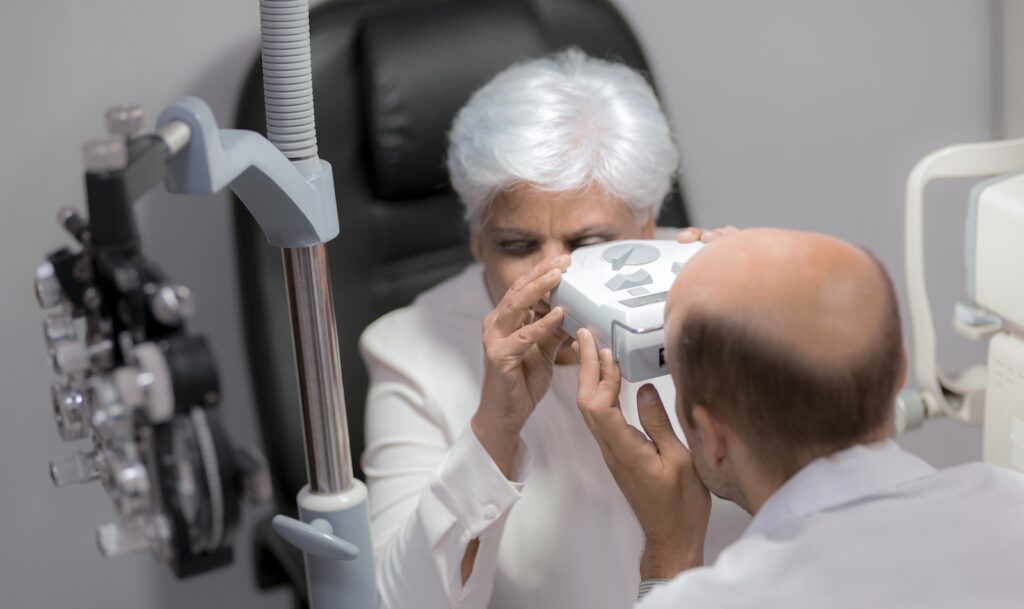
- Medical history and visual acuity test: We will ask about the exact time and type of visual impairment and measure your remaining visual acuity.
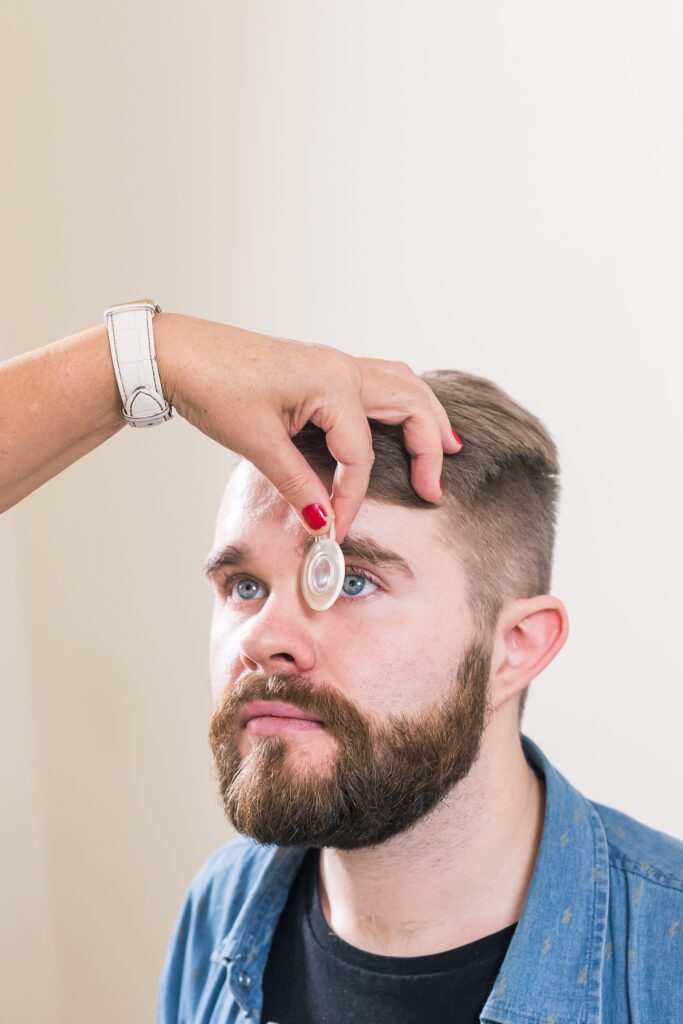
- Examination of the fundus: After dilating the pupil, Dr. Mareen Schmidt can directly assess the retina. In the case of an arterial occlusion, the retina appears pale and swollen; in the case of a venous occlusion, typical extensive hemorrhages are visible.
- Optical coherence tomography (OCT): This high-resolution scanning procedure is crucial for accurately measuring swelling of the macula (macular edema), the most common vision-threatening complication of a retinal vein occlusion.
- Fluorescein angiography (FAG): This dye test allows us to visualize the blood flow in the retinal vessels and assess the extent of oxygen deficiency.
Treatment after diagnosis: What follows the symptoms?
Treatment following the diagnosis of Eye stroke symptoms Treatment depends on the type of blockage. In the case of an arterial blockage, the goal is to dissolve the blood clot as quickly as possible, which can often only be attempted in a neurological clinic using specialized measures (pressure reduction, thrombolytic therapy). Unfortunately, the prognosis in these cases is often unfavorable.
In cases of retinal vein occlusion, therapy focuses on treating complications. The most common and significant consequence is macular swelling (macular edema). Here, intravitreal injection therapy (IVOM) is the treatment of choice. Highly effective medications are injected directly into the eye to reduce swelling and stabilize or improve vision. In some cases, laser treatment of the peripheral retina becomes necessary.
Eye stroke symptoms and their causes: A warning signal for the whole body
Eye stroke symptoms Eye problems are almost never purely visual. They are a loud alarm signal from your body, indicating an underlying systemic cardiovascular disease. The risk factors are the same as for a heart attack or stroke. Therefore, after acute ophthalmological care, a prompt and thorough internal medicine or cardiology evaluation is essential to find the cause and prevent future, potentially life-threatening events. The main risk factors include high blood pressure, diabetes, high cholesterol, and heart rhythm disorders.
Frequently asked questions about eye stroke symptoms
Here you will find answers to common questions that patients ask us about Eye stroke symptoms in our Frankfurt practice.
Is an eye infarction a stroke?
Yes, a Eye stroke It is essentially a "stroke of the eye". The mechanisms (vascular occlusion by a clot or calcification) and the underlying risk factors are identical. Therefore, the occurrence of Eye stroke symptoms It should be taken just as seriously as the signs of a stroke in the brain and requires a comprehensive internal medicine examination for prevention.
Are the symptoms of an eye stroke always painful?
No, and that's the tricky part. The classic ones Eye stroke symptoms They are usually completely painless. The absence of pain should never lead you to underestimate the situation or delay seeking medical attention. The lack of pain is a typical characteristic of this serious condition.
Can I become completely blind due to an eye stroke?
Yes, unfortunately, that's possible. A complete central retinal artery occlusion leads in most cases to very severe, permanent visual impairment, even to the point of practical blindness in the affected eye. A severe central retinal vein occlusion can also lead to massive vision loss if left untreated. That's why it's so important to... Eye stroke symptoms to know and act immediately.
What should I do if I notice symptoms of an eye stroke?
If you have the typical Eye stroke symptoms If you experience sudden, painless vision loss or see a shadow, go directly to the emergency room of the nearest eye clinic. Do not try to schedule a regular appointment. In the case of an arterial occlusion, every minute counts, and any necessary treatment can only be administered in a hospital.
Can an eye stroke recur?
Yes. Since the Eye stroke symptoms If symptoms indicate a systemic vascular disease, there is a high risk of recurrence without consistent treatment of the underlying risk factors (blood pressure, blood sugar, cholesterol) – either in the same eye, the other eye, or in the form of a heart attack or stroke in the brain. Therefore, follow-up care by an internist is crucial.
Who is particularly at risk of developing symptoms of an eye stroke?
People with known cardiovascular risk factors are particularly at risk. This includes, above all, patients with high blood pressure, diabetes mellitus, high cholesterol, known heart disease (especially atrial fibrillation), and smokers. If you belong to one of these risk groups, you should... Eye stroke symptoms know each other particularly well.
How is an eye stroke diagnosed?
The diagnosis is made by an experienced ophthalmologist through examination of the back of the eye. Eye stroke symptoms These lead to typical, visible changes in the retina, such as bleeding in the case of a venous occlusion or a pale swelling in the case of an arterial occlusion. Additional examinations, such as OCT, confirm the extent of the damage, particularly macular swelling.
Am I allowed to drive myself to the doctor if I have symptoms of an eye stroke?
No, absolutely not. You may be functionally monocular. Your vision could deteriorate rapidly, and you would be putting yourself and others at serious risk on the road. Your safety is our top priority.
Can an eye stroke also affect the other eye?
Yes, that's possible. Since the underlying risk factors affect the entire body, the other eye is also at risk. Therefore, after a diagnosis of vascular occlusion, regular checkups of both eyes are essential to monitor the risk to the other eye. Eye stroke symptoms Knowing this is therefore important even after an initial incident.
Why is a retina specialist like Dr. Mareen Schmidt important?
A retinal specialist is crucial because they have the most experience in diagnosing the various types of occlusion and in administering the necessary therapies (IVOM, laser). After the onset of Eye stroke symptoms Dr. med. Mareen Schmidt, your specialist in Frankfurt, can precisely assess the condition of your retina and initiate the most modern, vision-preserving treatment for you in order to achieve the best possible prognosis.
Act immediately in case of sudden vision problems.
The Eye stroke symptoms These are unmistakable distress signals from your body. Never hesitate to seek professional medical help if you experience these symptoms. If you have been diagnosed with a vascular occlusion and require specialized follow-up care and treatment, you are in the best hands at the practice of Dr. Mareen Schmidt. Please feel free to schedule an appointment for a comprehensive examination and consultation.