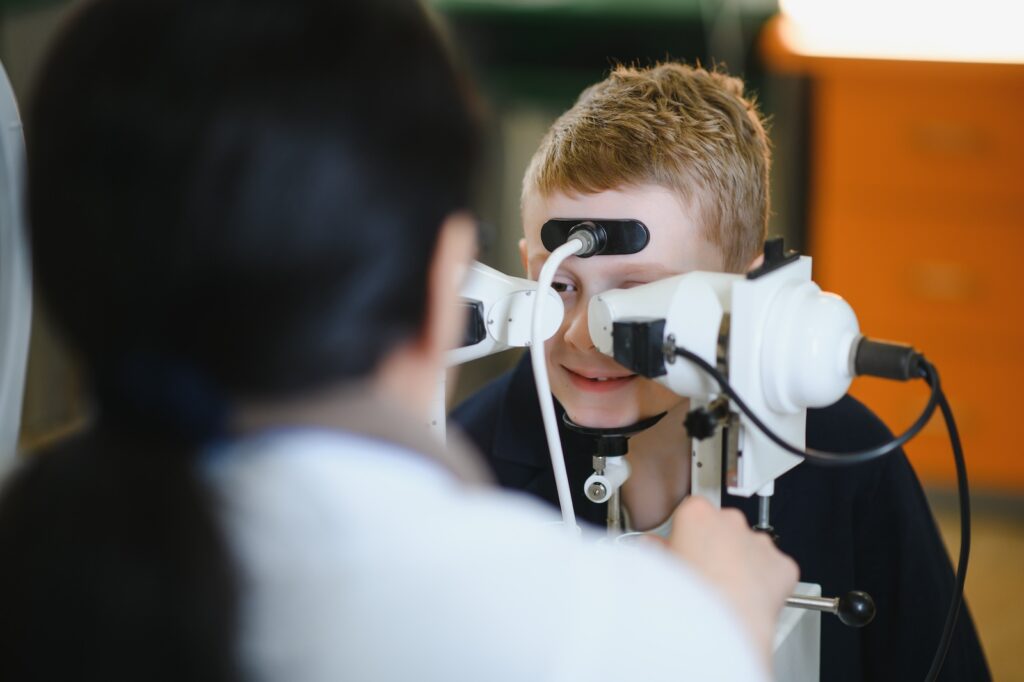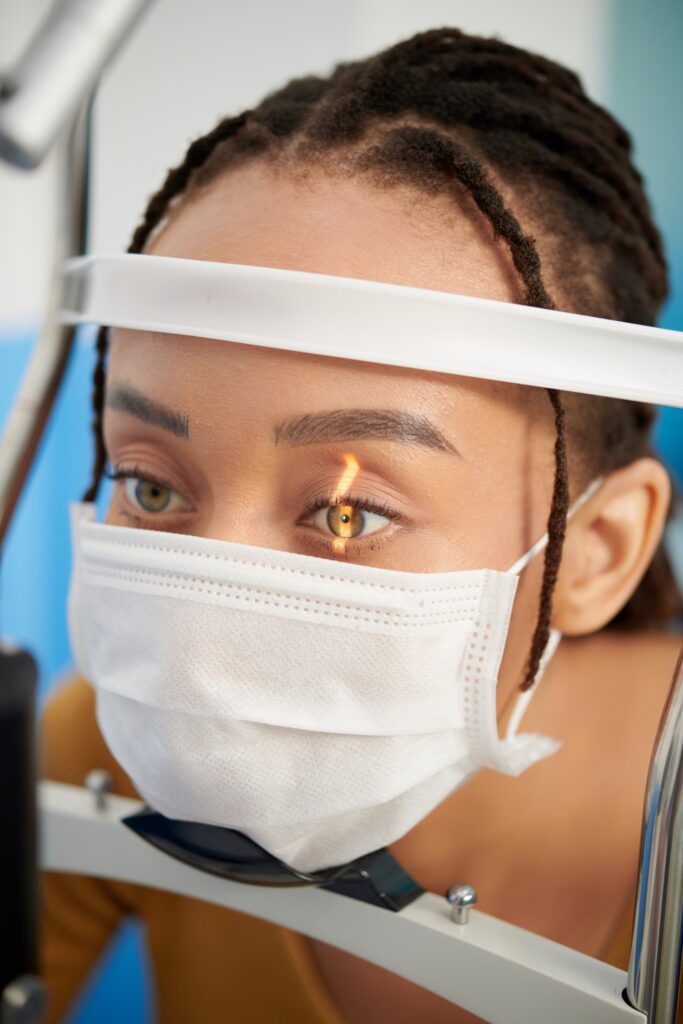
Measuring intraocular pressure, technically known as tonometry, is a central and indispensable part of glaucoma screening (glaucoma) and every comprehensive ophthalmological examination. Elevated intraocular pressure is the most important risk factor for the development of glaucoma, a disease that can cause gradual and irreversible damage to the optic nerve. At our ophthalmology practice in Frankfurt Westend, under the direction of Dr. med. Mareen Schmidt, we attach great importance to the Measure intraocular pressure as gently, precisely and pleasantly as possible for you.
Why is it so important to measure intraocular pressure?
A clear fluid, the aqueous humor, is continuously produced inside the eye, which also drains away again. This system ensures a stable pressure in the eye, which is necessary to give the eyeball its shape. If the outflow of aqueous humor is disturbed, the pressure inside the eye rises. This increased pressure weighs on the sensitive optic nerve head and can gradually and irreversibly destroy the fine nerve fibers. The tricky thing is that this process is completely painless and goes unnoticed for many years. The regular Measure intraocular pressure is therefore the most important method of detecting this risk at an early stage and preventing vision loss through timely treatment.
Gentle intraocular pressure measurement: Our non-contact tonometry
The times when the Measure intraocular pressure The days when the anaesthetized eye was associated with direct contact are largely over in modern screening. In our Frankfurt practice, we use non-contact tonometry as standard. This procedure is quick, hygienic and particularly comfortable for you as a patient.
The process is simple and gentle:
- Place your chin on a support and look straight ahead into the measuring device.
- You see a fixation light that helps you to keep your eye steady.
- The device emits a short, gentle and precisely dosed blast of air onto the surface of your cornea.
- A sensor measures the resulting minimal flattening of the cornea and uses this to precisely calculate the intraocular pressure.
The entire procedure takes just a few seconds, is completely contactless and painless. For many patients, this gentle method is a decisive reason to undergo this important preventive examination regularly and without hesitation.
Measuring intraocular pressure alone is not enough: our comprehensive approach
Although the Measure intraocular pressure is a central component, it is important to understand that a normal pressure value alone does not provide complete safety. There is a form of glaucoma, normal pressure glaucoma, in which the optic nerve is damaged despite statistically normal pressure values. Therefore the Measure intraocular pressure in our practice is always part of a more comprehensive glaucoma screening.
For us, a complete examination always includes
- Assessment of the optic nerve head under the microscope by Dr. Mareen Schmidt.
- If required, a high-resolution tomography of the optic nerve (OCT) for exact measurement of the nerve fiber thickness.
- Measurement of the corneal thickness (pachymetry) to correct the measured pressure value individually.
Only this combination of pressure measurement and optic nerve analysis enables truly reliable early detection.
Measuring intraocular pressure: What do the values mean?
Intraocular pressure is measured in „millimeters of mercury“ (mmHg). The measurement results are always evaluated in the context of your individual risk profile.
Measured value (mmHg) | Classification | What this means |
10 - 21 mmHg | Statistical standard range | The pressure is within a range that is considered safe for most people. However, regular checks remain important. |
22 - 25 mmHg | Borderline / „Ocular hypertension“ | The pressure is slightly elevated, but there is no optic nerve damage yet. Close monitoring is required to see if treatment is necessary. |
> 25 mmHg | Significantly increased | The risk of glaucoma damage is significantly increased. Pressure-reducing therapy is often useful as a preventive measure. |
There is no fixed threshold at which glaucoma begins. The decision to treat is always an individual consideration between the level of pressure and the condition of your optic nerve.
The 5-S method for measuring intraocular pressure
Even with such a fundamental investigation as the Measure intraocular pressure we apply the principles of our 5-S method to provide you with the best experience.
- Safe: We use calibrated, high-precision measuring devices for reliable results.
- Gentle: Our non-contact method is contactless and particularly pleasant for you.
- Low pain: The measurement is completely painless.
- Sterile: We also ensure the highest hygiene standards for non-contact processes.
- Carefully: We do not interpret the measured value in isolation, but always in the context of your overall eye health.
Frequently asked questions about measuring intraocular pressure
Here you will find answers to common questions that patients ask us about Measure intraocular pressure in our Frankfurt practice.
How often should I have my intraocular pressure measured?
As part of glaucoma screening from the age of 40, we recommend having your eyes checked every one to two years. Measure intraocular pressure to have them checked. In the presence of risk factors such as a family history or high myopia, annual check-ups are advisable in order to detect any changes at an early stage and increase safety.
Is measuring intraocular pressure with the air puff uncomfortable?
Most patients do not find the gentle puff of air from non-contact tonometry at all unpleasant. It may startle you briefly the very first time, but it is absolutely not painful. This method is much more comfortable than older contact methods and is one reason why the Measure intraocular pressure is so uncomplicated today.
What can influence my measurement?
Various factors can influence intraocular pressure in the short term, for example wearing a tight collar, pressing hard or holding your breath. It is therefore important that you sit in a relaxed position and continue to breathe normally during the measurement. The time of day can also play a role, as the pressure fluctuates throughout the day, which is why the Intraocular pressure measurement should always be carried out under standardized conditions.
Can I measure my intraocular pressure myself?
There are devices for self-measurement at home, but these are generally only useful for patients with known glaucoma that is difficult to control. Precise measurement and, above all, interpretation of the value in the context of the optic nerve examination by the ophthalmologist is crucial for prevention. The sole Measure intraocular pressure at home does not replace an ophthalmologic check-up.
My pressure value is high. Do I automatically have glaucoma now?
No, not necessarily. High intraocular pressure is the most important risk factor, but not the disease itself. This is referred to as „ocular hypertension“. Whether there is already damage to the optic nerve and treatment is necessary can only be clarified by an additional examination of the optic nerve. The Measure intraocular pressure is the first, important step in this clarification.
Is it possible to reduce intraocular pressure without using drops?
In most cases, treatment with pressure-reducing eye drops is the most established method. Laser treatment (SLT), which is also carried out in Dr. Mareen Schmidt's practice, has become established for moderately elevated values. Surgical procedures that can further reduce the pressure are carried out in the eye clinic and are associated with extensive and lengthy follow-up treatment. Lifestyle changes only have a very small influence on intraocular pressure, which is why it is important to follow the Measure intraocular pressure should not rely on this alone.
What is the difference to the measurement at the optician?
Some opticians also offer to Measure intraocular pressure. This can be a first indication. However, an optician is prohibited by law from making a medical diagnosis. They cannot and must not carry out the decisive second step - the assessment of the optic nerve. Reliable glaucoma screening is therefore always a purely medical service.
Why is it important to measure corneal thickness?
The measuring devices are calibrated to an average corneal thickness. If your cornea is thicker than average, the pressure is incorrectly measured too high; if it is thinner, it is measured too low. By additionally measuring the thickness of the cornea, we are able to determine the Measure intraocular pressure The value determined can be individually corrected to obtain the „true“ intraocular pressure.
My pressure is always normal, but my doctor says my optic nerve looks abnormal. How can that be?
This is the classic case of normal pressure glaucoma. In these patients, the optic nerve is already damaged by statistically „normal“ pressure values, often because the blood supply to the optic nerve is also disturbed. This case shows impressively why the sole Measure intraocular pressure is never sufficient for a secure pension.
Does the health insurance company cover the costs of the measurement?
The Measure intraocular pressure is usually covered by private health insurance companies. We will advise you transparently on this.
A small test with a big impact
The regular Measure intraocular pressure is a small, quick and painless test with an enormous preventive effect. It is the first and most important step in protecting your eyesight from the silent danger of glaucoma. At Dr. Mareen Schmidt's practice in Frankfurt, we carry out this important preventive examination with the utmost care and using state-of-the-art technology. Please feel free to make an appointment.