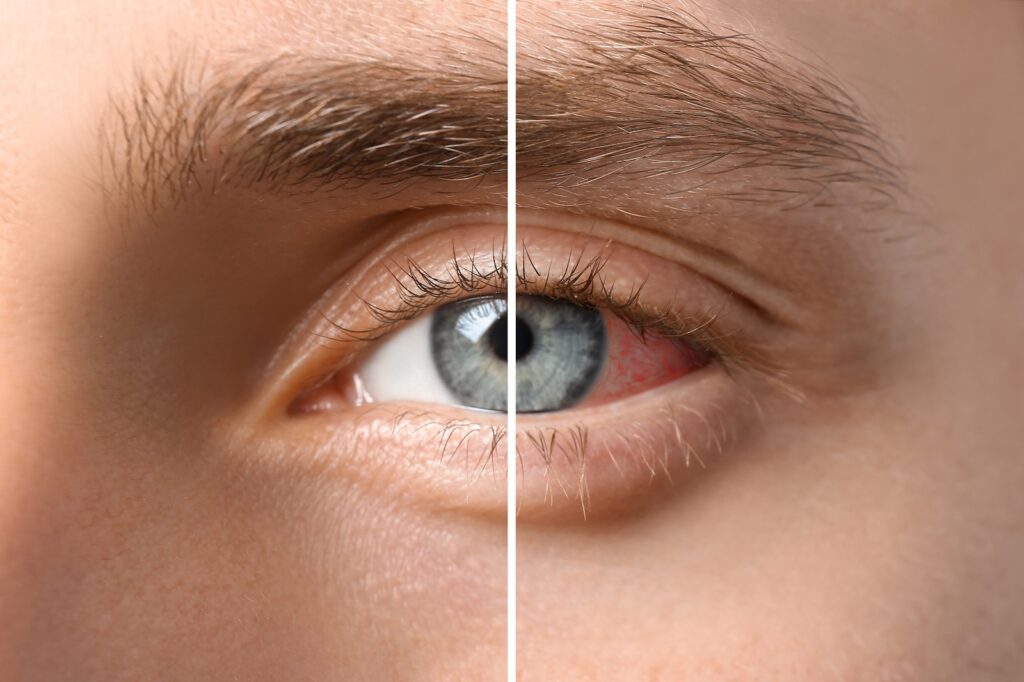
A uveitis specialist in Frankfurt is your key point of contact when it comes to the complex diagnosis and treatment of inflammation inside the eye. Uveitis is much more than just a „red eye“; it is a serious condition that, if left untreated, can lead to severe and permanent damage, including vision loss. At Dr. Mareen Schmidt’s ophthalmology practice in Frankfurt’s Westend district, you’ll find a highly qualified Uveitis Specialist, which combines its many years of experience with state-of-the-art diagnostic techniques to identify the cause of your inflammation and initiate a personalized treatment plan designed to preserve your vision.
What is uveitis, and why is seeing a specialist so important?
Uveitis is an inflammation of the middle layer of the eye, the uvea, which includes the iris, the ciliary body, and the choroid. Depending on which part of the eye is affected, the condition can present in very different ways and have different causes. The tricky thing about uveitis is that it often affects not only the eye itself but can also be the first sign of an undiagnosed systemic disease affecting the entire body, such as a rheumatic disease. A Uveitis Specialist has the necessary expertise to identify these complex interrelationships, make the correct diagnosis, and coordinate interdisciplinary treatment. The goal is not only to control the inflammation in the eye, but also to identify the underlying cause.
Uveitis Specialist: Recognizing the Symptoms of Eye Inflammation
The symptoms of uveitis can appear suddenly and severely or develop gradually. They vary greatly depending on which part of the eye is affected. If you notice one or more of the following signs, you should immediately see a Uveitis Specialists visit.
- Anterior uveitis (anterior uveitis): This is the most common form. Typical symptoms include a deep, dull pain, severe redness of the eye, increased sensitivity to light (photophobia), and blurred vision.
- Intermediate uveitis (middle uveitis): In these cases, the focus is often not on the pain, but rather on seeing „floaters“ (mouches volantes) and increasingly blurred vision.
- Posterior uveitis: This form affects the retina and choroid. It usually manifests as painless vision loss, blurred vision, and possibly visual field defects.
- Panuveitis: In this condition, all parts of the eye are inflamed, leading to a combination of the symptoms mentioned.
Your Uveitis Specialist in Frankfurt: Our Diagnostic Approach
Diagnosing uveitis requires a thorough and systematic examination. As your Uveitis Specialist in Frankfurt We follow a step-by-step diagnostic process to determine the exact nature, severity, and, above all, the possible cause of your condition.
- Targeted Medical History: We will have a very detailed discussion about your symptoms, as well as your overall health, any joint pain, skin changes, or other symptoms that might indicate a systemic disease.
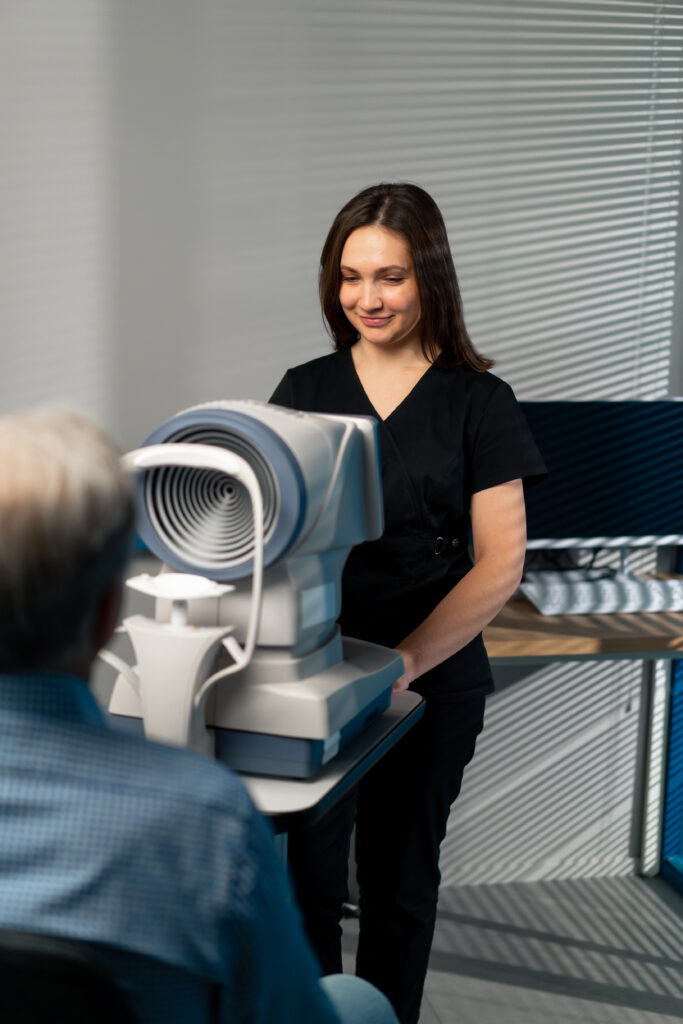
- Slit lamp examination: Using an ophthalmic microscope, we can directly visualize inflammatory cells in the anterior segment of the eye and assess the severity of the inflammation.
- Intraocular Pressure Measurement: Uveitis can lead to an increase in intraocular pressure, which poses a risk of secondary glaucoma.
- Examination of the fundus: After dilating the pupil, we examine the retina, choroid, optic nerve, and vitreous for signs of inflammation.
- Additional imaging: Using optical coherence tomography (OCT), we can accurately measure swelling of the macula (macular edema), a common complication. In some cases, fluorescein angiography is also necessary.
- Interdisciplinary Collaboration: If we suspect an underlying systemic disease, we work closely with specialists from other fields (e.g., rheumatologists, internists) and arrange for the necessary blood tests or radiological evaluations.
Treatment by a Uveitis Specialist: Modern Therapeutic Approaches
The Uveitis Treatment Treatment by a specialist aims to quickly and effectively reduce inflammation, relieve pain, preserve vision, and prevent long-term complications. The treatment plan depends on the type and severity of the uveitis.
An Overview of the Different Types of Uveitis
Type of Uveitis | Affected part of the eye | Typical symptoms | Common systemic associations |
Anterior uveitis | Anterior segment of the eye (iris, ciliary body) | Red, painful eye; sensitivity to light; blurred vision. | Often rheumatic diseases (e.g., ankylosing spondylitis), chronic inflammatory bowel diseases. |
Intermediate uveitis | Middle segment of the eye (vitreous body) | Schleiersehen, the perception of „flying gnats.“. | Sarcoidosis, multiple sclerosis; however, the cause often remains unclear (idiopathic). |
Posterior uveitis | Posterior segment of the eye (choroid, retina) | Blurred vision, visual field defects, perception of blind spots. | Infections (e.g., toxoplasmosis), autoimmune diseases, sarcoidosis. |
Panuveitis | All parts of the eye are affected. | A combination of all the symptoms mentioned. | Often serious systemic diseases such as Behçet's disease or sarcoidosis. |
Treatment options include:
- Cortisone eye drops: In cases of recurrent anterior uveitis, this is the primary treatment for controlling inflammation in the anterior segment of the eye.
- Cortisone eye injection (IVOM): In cases of intermediate or posterior uveitis, as well as macular edema, the targeted injection of corticosteroid depot formulations directly into the eye is often the most effective method.
- Systemic Therapy: In cases of very severe, bilateral, or chronic disease, drug therapy in the form of tablets or infusions (cortisone, immunosuppressants, biologics) is often necessary. This therapy is managed in close consultation with the appropriate specialist (e.g., a rheumatologist).
Frequently Asked Questions for Your Uveitis Specialist
Here you will find answers to common questions that patients ask us about uveitis at our Frankfurt practice.
Is uveitis dangerous?
Yes, untreated or inadequately treated uveitis is dangerous and can lead to serious, long-term complications. As your Uveitis Specialist Our goal is to prevent these complications—such as cataracts, secondary glaucoma, macular edema, or damage to the optic nerve—through timely and consistent treatment. Your vision is seriously at risk with this condition.
Is uveitis contagious?
In the vast majority of cases, uveitis is not contagious. The most common causes are autoimmune reactions or rheumatic diseases, which cannot be transmitted from person to person. Only in very rare cases—when uveitis is triggered by an acute infection—is caution warranted. Your Uveitis Specialist will explain this to you in detail.
Can uveitis be completely cured?
That depends on the cause. Uveitis caused by a treatable infection can be completely cured. However, if the cause is a chronic systemic disease such as rheumatism, uveitis often tends to recur. The goal of treatment by the Uveitis Specialists The goal, then, is to bring the disease into a permanently stable, inactive phase (remission).
How long does treatment for uveitis take?
The duration of treatment varies greatly from person to person. Acute, uncomplicated anterior uveitis can often be treated with eye drops within a few weeks. Chronic or posterior forms of uveitis often require months or even years of treatment and long-term care by an experienced Uveitis Specialists, to prevent relapses.
What is the cause of my uveitis?
Identifying the cause is one of the main tasks of the Uveitis Specialists and is often a process of investigation. About half of patients have an associated systemic disease. In the other half, the cause remains unclear despite comprehensive diagnostic testing; this is referred to as „idiopathic uveitis.“ Even in these cases, however, the inflammation responds well to treatment.
Do I always have to see a rheumatologist if I have uveitis?
Not always, but very often. Since there is a strong link between uveitis and rheumatic diseases, interdisciplinary collaboration is crucial. As your Uveitis Specialist In Frankfurt, if we suspect a particular condition, we coordinate a referral to a rheumatologist to ensure a comprehensive diagnosis and treatment plan.
What can I do on my own to help the process along?
Your active participation is important. Be sure to take your medications exactly as prescribed and keep your follow-up appointments with your Uveitis Specialists consistently. A healthy lifestyle, stress reduction, and quitting smoking can have a positive effect on the immune system and help manage the course of the disease.
Aren't cortisone treatments dangerous?
Cortisone is a highly effective and often indispensable anti-inflammatory drug. However, its use requires careful monitoring by an experienced physician in order to detect potential side effects—such as an increase in intraocular pressure or the development of cataracts—at an early stage. As your Uveitis Specialist We carefully weigh the benefits and risks of each treatment and closely monitor the patient's progress.
How often do I need to go for checkups if I have uveitis?
The frequency of checkups depends heavily on the activity of your condition. During the acute phase, checkups may be scheduled with your Uveitis Specialists may be necessary every few days. During a stable, quiet phase, the intervals can be extended to several months. Regular monitoring is key to detecting a flare-up of inflammation early on.
Why is Dr. Mareen Schmidt the right person for me to contact?
As an experienced retina specialist, Dr. Mareen Schmidt has particular expertise in the diagnosis and treatment of diseases of the posterior segment of the eye, where the most severe forms of uveitis occur. She is proficient in the full range of modern diagnostic techniques (OCT, angiography) and treatments (IVOM). This specialization makes her your highly qualified Uveitis Specialist in Frankfurt.
Your Eye Health in the Event of Inflammation: In Experienced Hands
Uveitis is a complex condition that requires specialized and careful care. Do not hesitate to seek professional help if you experience symptoms such as a painful, red eye or unexplained vision loss. Please feel free to schedule an appointment at short notice for a comprehensive and personalized consultation at our Frankfurt practice.